
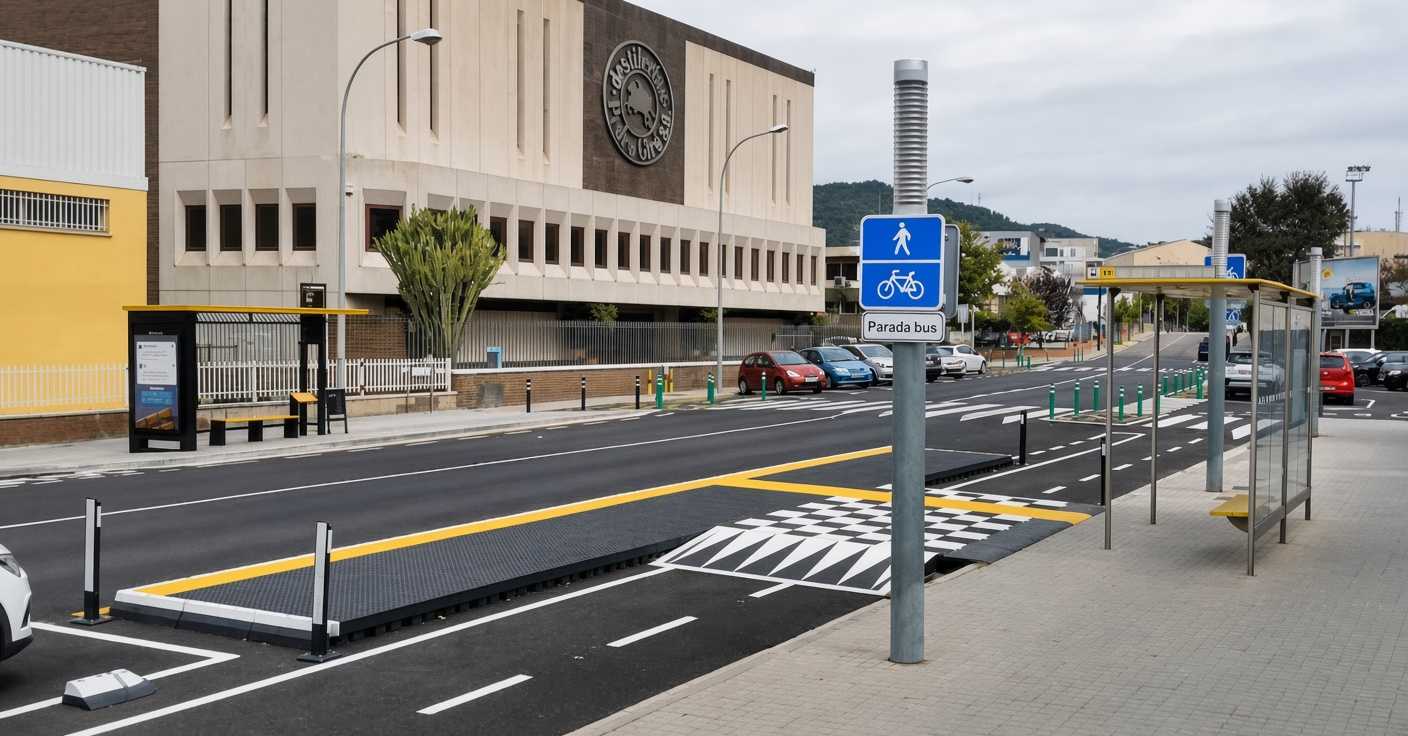
Bus stops and bike lanes are key elements of urban mobility, but they can also become conflict points when they intersect.
At ZICLA, we can help solve this conflict by creating an accessible, clearly marked infrastructure that allows bike lane users and public transport users, in this case, bus, to share the space safely. To achieve this, it is important to consider the space available on each street and the configuration of the bus stop.
The Vectorial® system offers two configurations that provide a quick and efficient solution for each situation:
The first is the bus platform configuration with access bridge and integrated cycle path. This configuration allows cycle lane users to ride behind the bus stops. This reduces conflicts between them and buses, and, at the same time, creates a safe waiting area for bus users. Here are some examples:
City Detroit, MI, US.
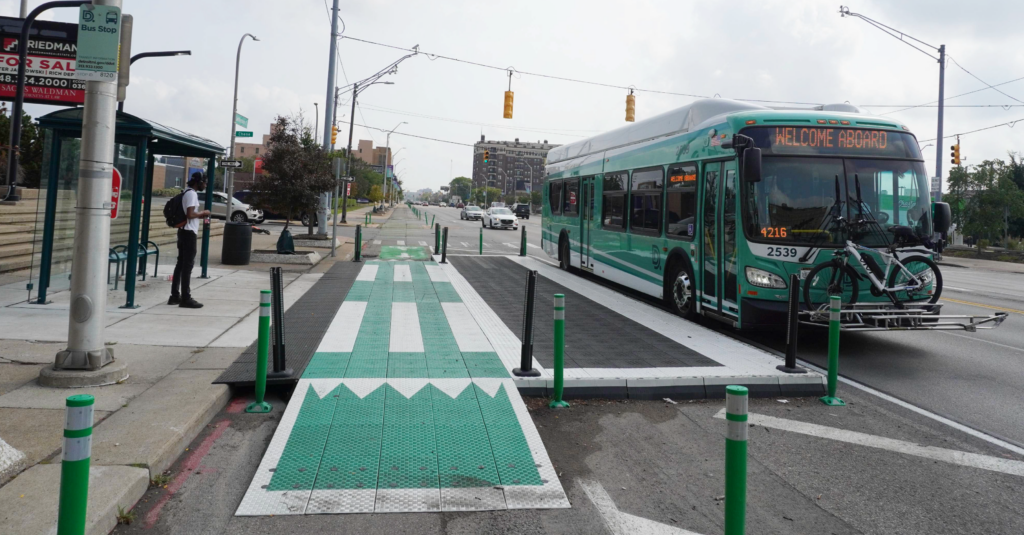
→ Discover how the project was developed in Detroit
L’Hospitalet de Llobregat, ES.

→ Discover how the project was developed in L’Hospitalet de Llobregat
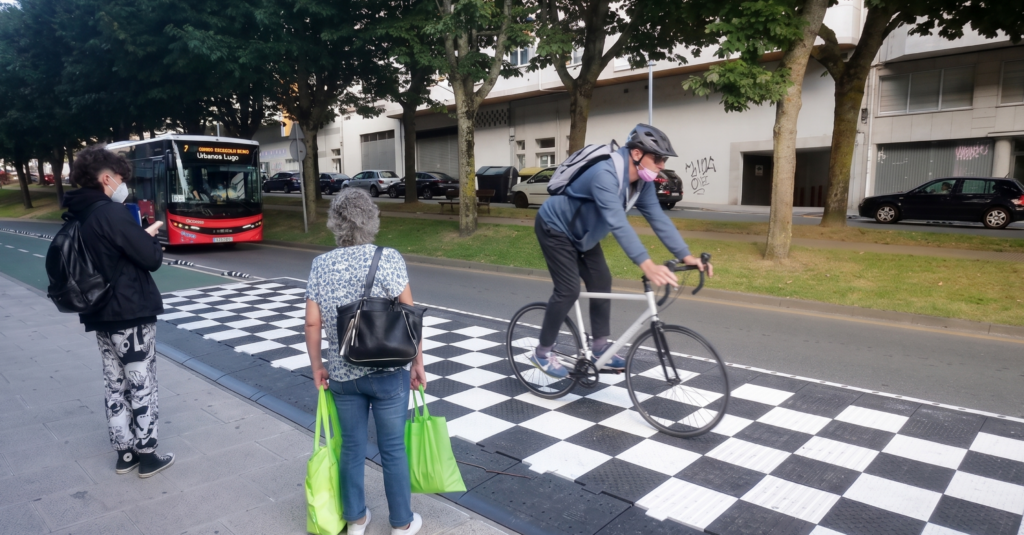
The second Vectorial® system configuration was designed for situations where the available space is very limited. It consists of a bus platform with integrated cycle lane. This configuration allows bike lane users to safely cross the passenger boarding area when there are no buses at the stop, although bus users will always have priority. Here are some examples:
Palaiseau, FR
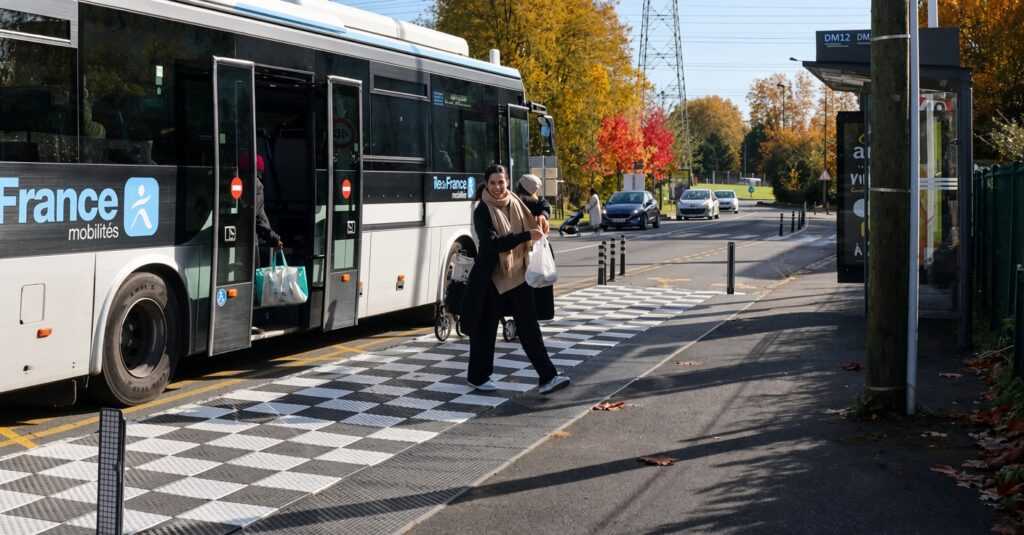
→ Discover how the project was developed in Palaiseau
Lugo,ES.
0 Comments