

Today, many cities host different types of mobility, such as motorized traffic, bicycles, personal mobility vehicles (PMV), and pedestrians, all sharing the same space. Finding solutions to organize the different modes of transport is essential for safe travel around the city.
The construction of a bike lane on the road often involves multiple challenges, such as reduced budgets and limited space for its implementation. In this context, modular, reversible, and flexible solutions that can be tailored to the specific characteristics of each city and project can help. The Zebra Family® cycle lane separators and the modular traffic lane dividers of the Zipper® system help to implement these solutions.
Success cases

City of Miami Beach, FL, US.
The city of Miami Beach had experienced a notable increase in the use of bicycles and public transportation, as well as walking. In response to this situation, the city developed a Master Plan that included the reorganization of one of its most iconic and busy streets: Ocean Drive.
One of the essential requirements of the new cycling infrastructure was that it had to be reversible in order to adapt to the special characteristics of this road. The solution chosen for the segregation of a reversible two-way bike lane was Zebra Family® separators, which allow for safe segregation and quick and easy installation and removal.
→Discover how the project was developed in Miami Beach

Fortaleza, BR.
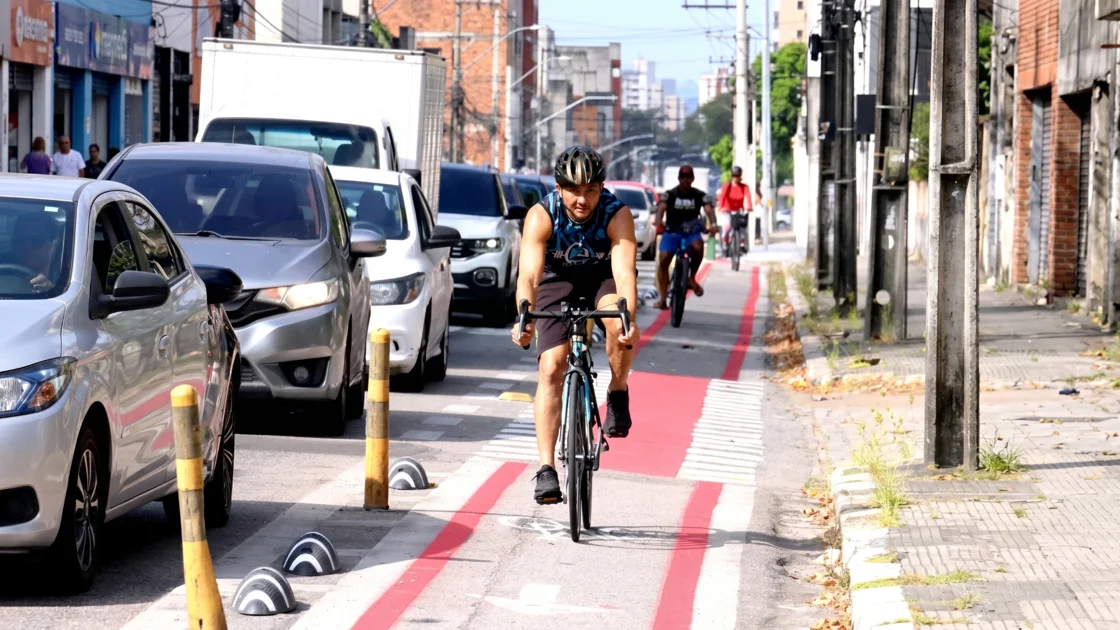
As part of the international Bloomberg Initiative for Cycling Infrastructure (BICI), and with technical support from the Global Designing Cities Initiative, the Prefeitura de Fortaleza launched a cycling infrastructure project to improve road safety and promote sustainable mobility.
To carry out this project, the AMC (Autarquia Municipal de Trânsito e Cidadania) built a bike lane and installed Zebra Family® cycle lane separators. This created a clear and safe separation among the different traffic flows and protected the bike lane on the road.


La Rochelle, FR.
The Communauté d’Agglomération de La Rochelle, which includes the city of La Rochelle, set out to implement its Cycling Master Plan with the aim of expanding the bike network to 400 km by 2030. This initiative is part of a broader strategy to make the Agglomération de La Rochelle the first carbon-neutral territory in France by 2040.
To improve the segregation of bike lanes included in the Cycling Master Plan and to enhance Lecrerc Avenue’s appearance, the City of La Rochelle decided to install Zipper® system modules.
→Discover how the project was developed in La Rochelle

City of Los Angeles, CA, US.
As part of the Hollywood Boulevard Safety and Mobility Project, an initiative aimed at transforming one of Los Angeles’ most iconic streets into a safer and more accessible space, the Los Angeles Department of Transportation (LADOT) built a bike lane and chose the modular traffic dividers of the Zipper® system to create a segregated bike lane and ensure the safety of this cycling infrastructure.
→Discover how the project was developed in Los Angeles

These types of projects show the importance of having simple, safe, and effective solutions for creating cycling infrastructure. Flexible solutions such as the modular traffic lane dividers of the Zipper® system modules or the Zebra Family® cycle lane separators allow cities, regardless of their size or circumstances, to adapt and create their cycling network quickly and efficiently.
0 Comments