
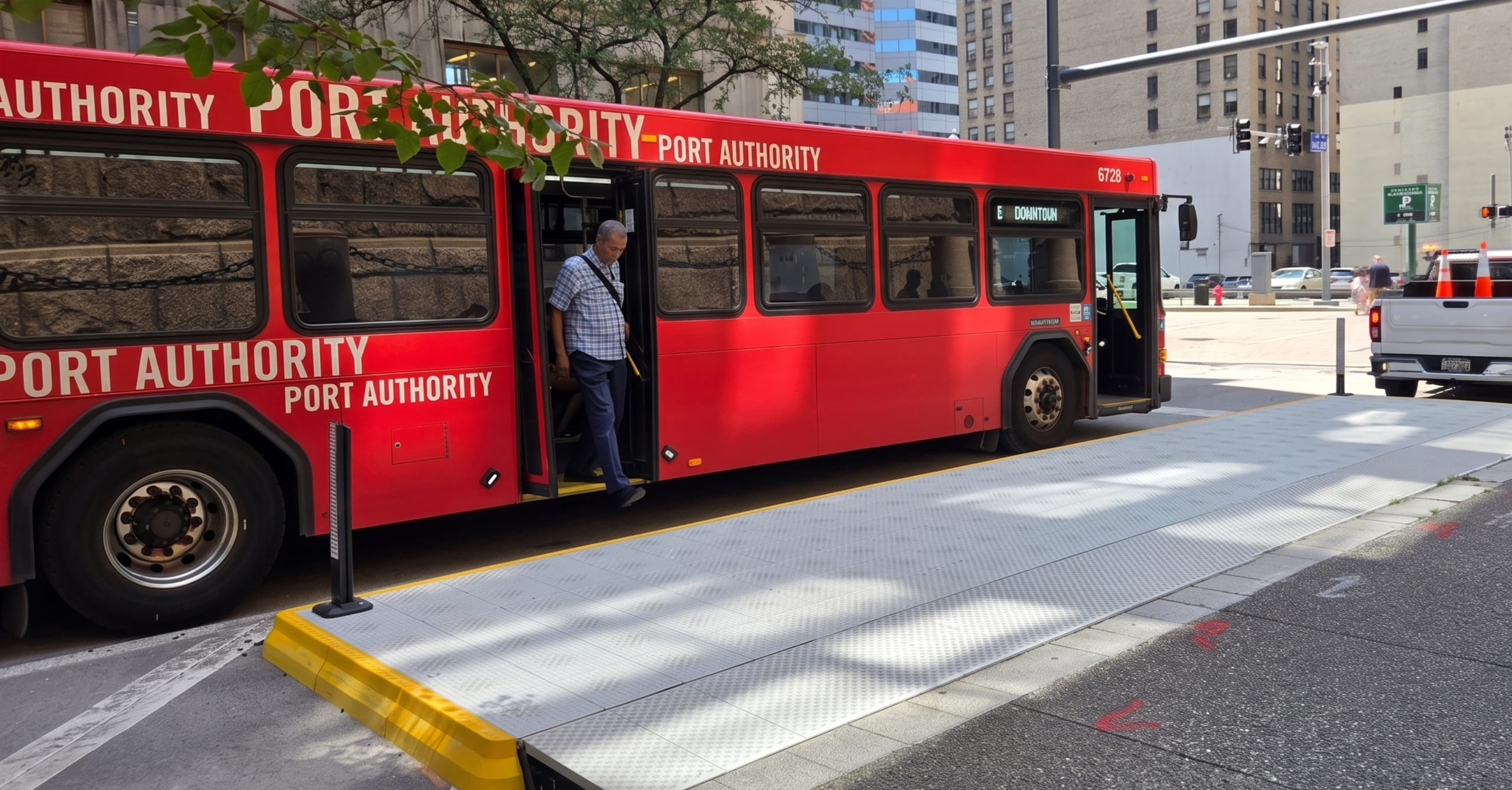
In public space design, every detail matters. Materials, colors, and textures not only define the aesthetics of a street, but also its functionality and identity. At ZICLA, we work to ensure that our solutions help create safer, more accessible, and more inclusive streets that integrate naturally into each environment. These solutions not only improve mobility and road safety but also adapt to the regulations and identity of each city.
At ZICLA, we understand that there is no one-size-fits-all solution for every city; each environment requires a specific response. The Vectorial® system is a clear example of this. In addition to improving accessibility at bus stops, it stands out for its high level of customization, allowing the type and color of the surface and the height of its modules to be adapted to the needs of each project, ensuring compliance with local regulations and visual coherence with the urban environment.
Many cities in the U.S. have recognized the Vectorial® system’s adaptability to local conditions and have chosen it to improve accessibility at their bus stops, as it integrates seamlessly into the existing urban design. Clear examples were given in projects carried out recently in the cities of Seattle and Pittsburgh.

Seattle, WA, US : In this project led by the Seattle Department of Transportation (SDOT), it was decided to install a customized platform using the Vectorial® system, whose surface was designed in different colors to represent the LGTBIQ+ flag. This intervention seeks to convey a message of inclusivity, reflecting a commitment to equality and representation of all people in public spaces, while improving accessibility for all public transport users.
→Discover more about this project
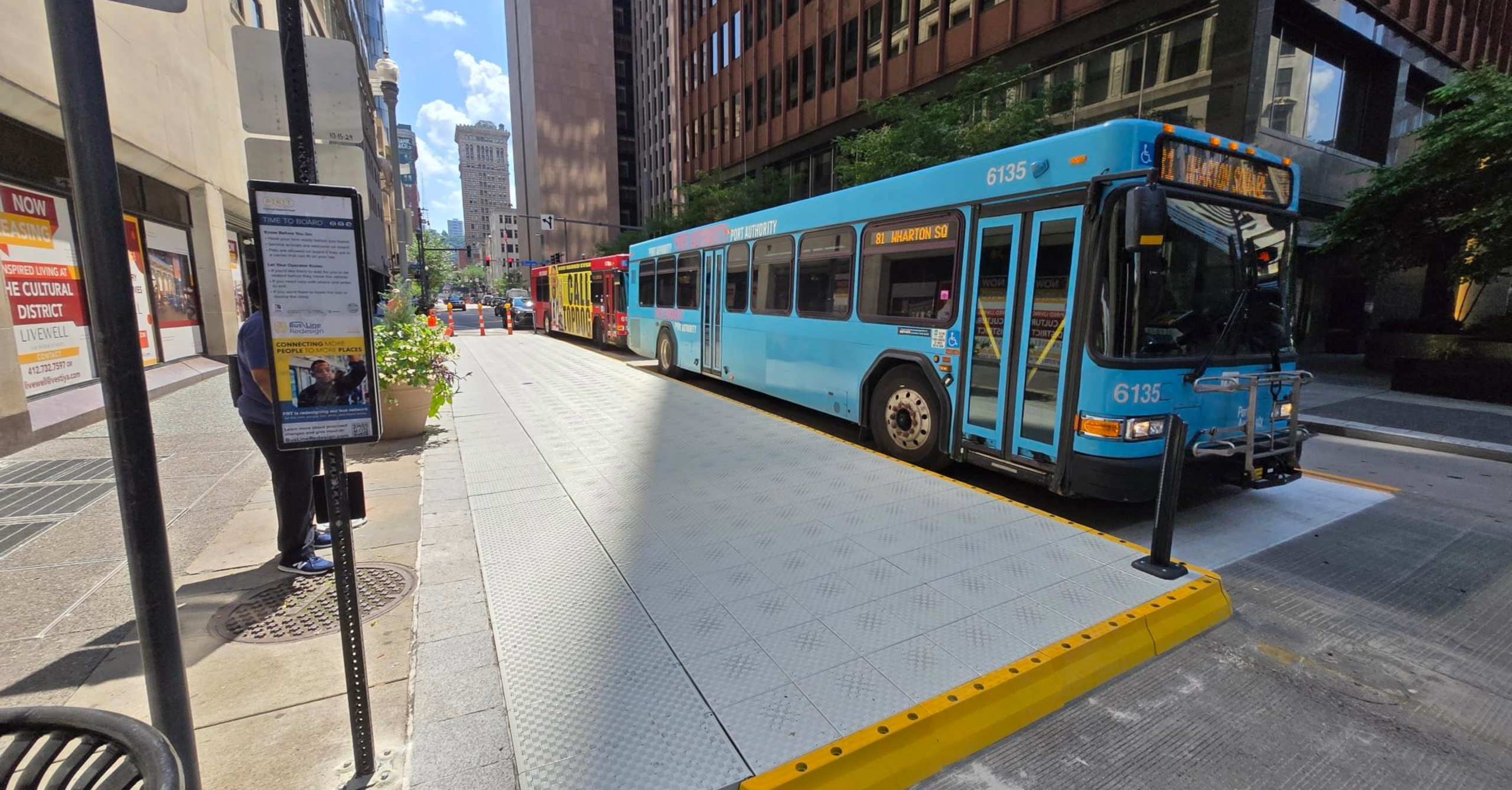
Pittsburgh, PA, US: In this project, one of the priorities of Pittsburgh Regional Transit (PRT), the entity promoting the project, was to maintain aesthetic consistency with the rest of the bus stops in the city’s public transport network. Vectorial® system platforms were installed at these stops, with surfaces in shades that matched the existing bus stops, ensuring a uniform visual integration.
→Discover more about this project
In public space design, every detail matters. Materials, colors, and textures not only define the aesthetics of a street, but also its functionality and identity. At ZICLA, we work to ensure that our solutions help create safer, more accessible, and more inclusive streets that integrate naturally into each environment. These solutions not only improve mobility and road safety but also adapt to the regulations and identity of each city.
At ZICLA, we understand that there is no one-size-fits-all solution for every city; each environment requires a specific response. The Vectorial® system is a clear example of this. In addition to improving accessibility at bus stops, it stands out for its high level of customization, allowing the type and color of the surface and the height of its modules to be adapted to the needs of each project, ensuring compliance with local regulations and visual coherence with the urban environment.
Many cities in the U.S. have recognized the Vectorial® system’s adaptability to local conditions and have chosen it to improve accessibility at their bus stops, as it integrates seamlessly into the existing urban design. Clear examples were given in projects carried out recently in the cities of Seattle and Pittsburgh.
0 Comments