| LOCATION: | City of Detroit, MI, US. |
| PROJECT NAME: | Installation of bus platforms as part of the DDOT Reimagined initiative. |
| DATE: | 2025. |
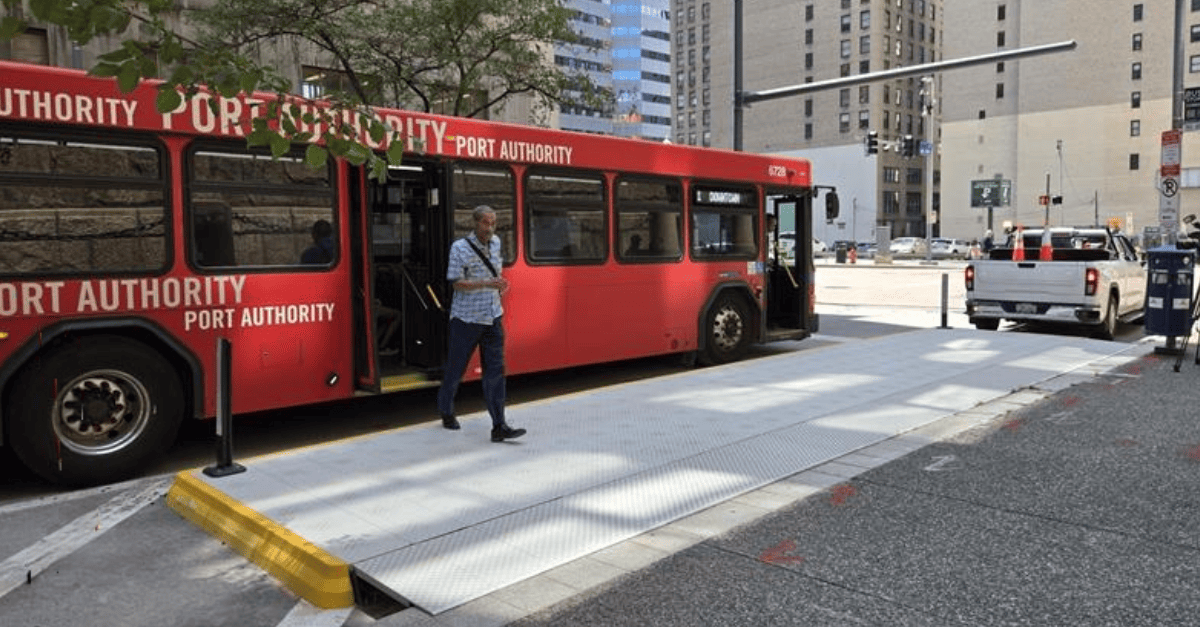
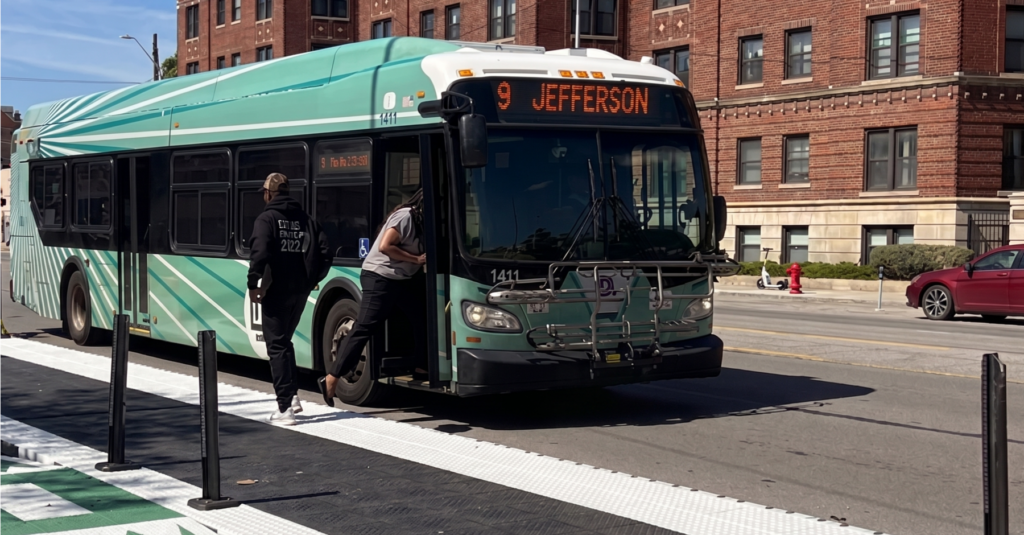
The Detroit Department of Transportation (DDOT) completed the installation of 21 new Vectorial® bus platforms along East Jefferson Avenue, as part of a pilot project within its DDOT Reimagined initiative.
This initiative aimed to create a safe and accessible multimodal corridor, designed to improve connectivity between downtown and the city’s outer neighborhoods.
It is worth noting that East Jefferson Avenue already had a bike lane in place, which in several sections overlapped with the bus route, creating conflicts between both modes of transport, and road safety issues.
Needs and objectives
The goal of the DDOT was to transform the city’s public transportation system and shift toward a more efficient and inclusive model, focusing on improving travel time, safety, and user experience. To achieve this, the DDOT addressed two main needs:
1. Improving operational efficiency and the boarding experience
- To reduce bus maneuvering when approaching stops.
- To facilitate faster and more comfortable passenger boarding and alighting.
- To optimize bus travel times along the corridor.
2. Safety, inclusion, and multimodal coexistence
- To improve road safety and the coexistence between buses and bicycles.
- To ensure safe and continuous mobility for bike lane users without needing to leave the lane to pass bus stops.
- To assure compliance with ADA (Americans with Disabilities Act) standards and guarantee universal accessibility at bus stops for all users.
Proposed solution
The DDOT selected the Vectorial® bus platform system to achieve its objectives.
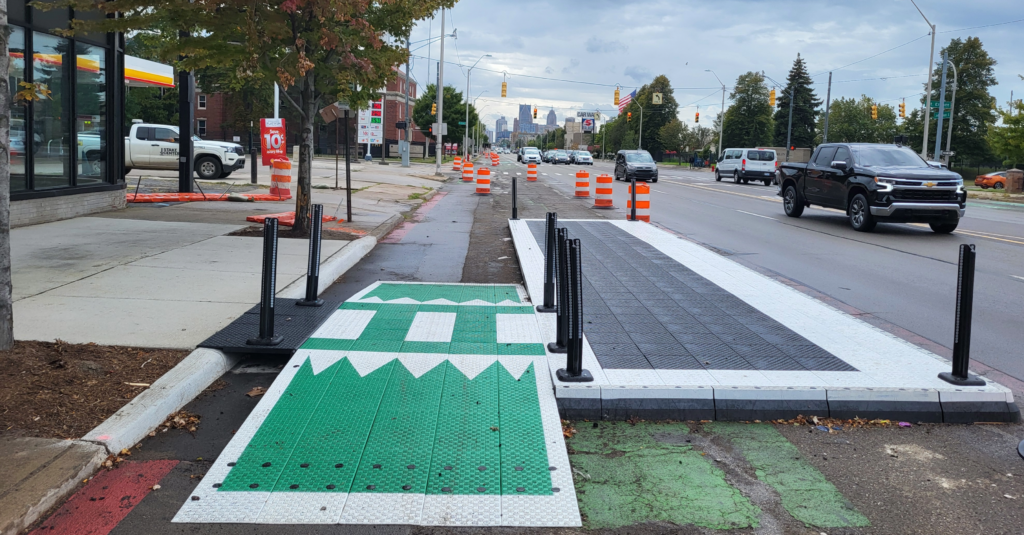
On the one hand, all installed bus platforms included an access bridge and an integrated bike lane, allowing cyclists to continue riding behind the bus stops without leaving the bike lane and without interfering with passenger boarding and alighting.
On the other hand, thanks to the installation of the Vectorial® bus platforms, sidewalks were extended into the roadway, allowing buses to approach stops more easily, reducing the number of required maneuvers and optimizing boarding times. At the same time, this extension created a safe waiting area for public transport users.
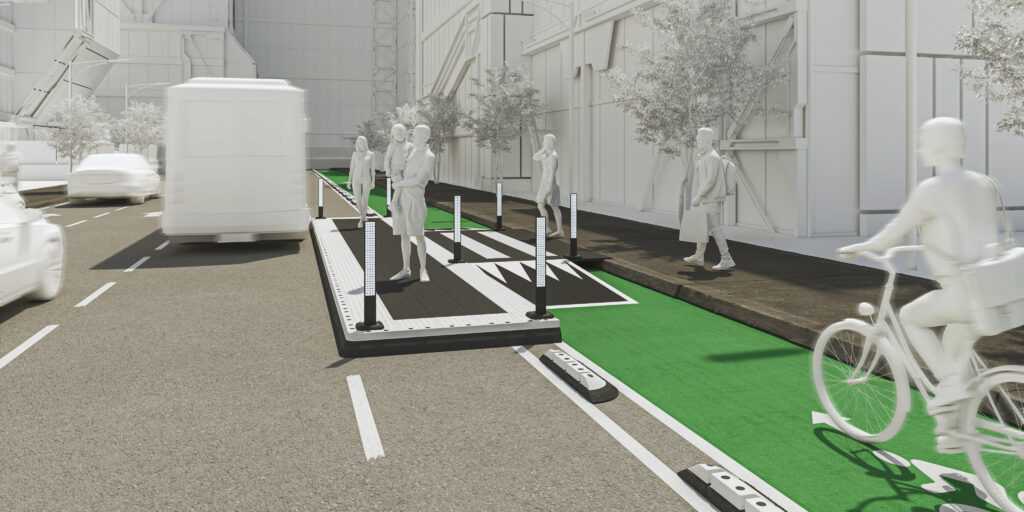
In addition, to meet universal accessibility standards, all platforms include warning surface modules, ensuring accessibility and safety for users.
Finally, all platforms were equipped with Pointer® Flex vertical delineators, which warns the beginning and end of each platform and maximize their visibility from a distance, enhancing safety for all users.
This project represents the DDOT’s commitment to improving accessibility and safety at bus stops along a high-demand urban corridor in the city of Detroit. At ZICLA, we are very proud of the trust placed in our Vectorial® modular solution, which enabled the transformation of bus stops in a fast, efficient, and safe way, promoting the coexistence of different transport modes